RNA Delivery Unlocks Efficient B-Cell Engineering
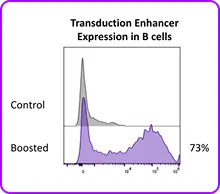
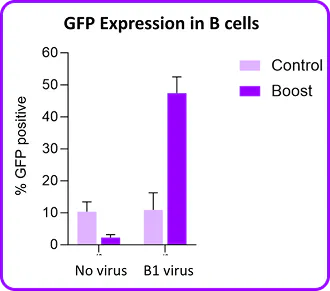
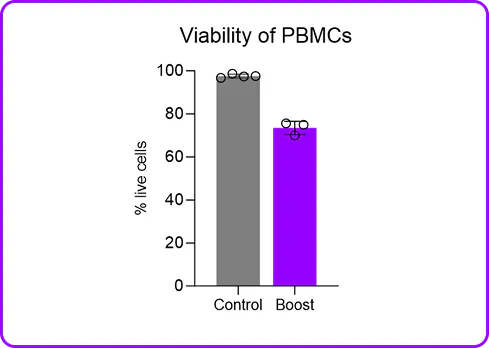
Intracellular delivery of RNA enabled strong functional gains in primary human B cells. Following delivery of a circular RNA encoding a lentiviral transduction enhancer, B cells exhibited robust intracellular expression of the enhancer, with 70%+ of cells positive by flow cytometry. This translated directly into a 3.6-fold improvement in downstream gene transfer: exposure to a GFP-encoding lentivirus resulted in 45%+ GFP+ B cells, up from a ~10% baseline without the enhancer — while no-virus conditions showed minimal background signal. These results demonstrate that RNA pre-treatment can substantially improve lentiviral transduction efficiency in primary B cells without compromising cell integrity.