
Engineering Cell Fate Through Multiplexed Transcription Factor Delivery

Who this is for:

  • Stem cell and regenerative medicine scientists: Researchers engineering hematopoietic, mesenchymal, or pluripotent stem cells (HSCs, MSCs, iPSCs)
  • Cell therapy developers: R&D teams in biotech/pharma working on cell-based therapies who need scalable, gentle transfection of stem cells

Opportunities

  • Minimal disruption of cell state and function: Transcriptomic profiling confirms minimal gene dysregulated at 24 h post-delivery in unstimulated primary cells, in stark contrast to the thousands of genes affected by electroporation. This allows precise modulation of cell behavior without unintended consequences.
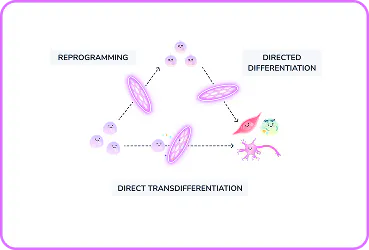
  • Preserve differentiation capacity post-delivery: Stem cells retain their full differentiation potential following mechanoporation. For instance, delivery of transcription factors (e.g., NGN2) into iPSCs drives targeted lineage commitment with rapid marker expression, all while maintaining a stable gene expression profile.
  • Maintain engraftment potential: Stem cells engineered using mechanoporation retain high viability and functional attributes essential for hematopoietic reconstitution. Unlike harsher transfection methods, mechanoporation avoids activation or exhaustion signatures.
  • Broad cargo compatibility with sensitive stem cells: Achieve efficient intracellular delivery of mRNA, siRNA, CRISPR RNPs, proteins, and other biologics into fragile populations such as iPSCs, CD34⁺ HSCs, etc. Mechanoporation enables this without compromising cell viability, phenotype, or function.

Results Obtained

  • Initiated the conversion of human induced pluripotent stem cells (iPSCs) into neurons using Ngn2 mRNA
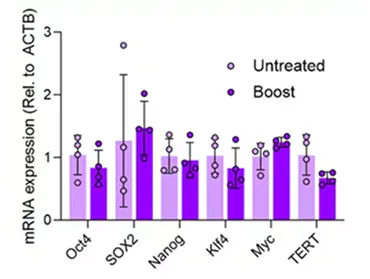
  • iPSCs maintain expression of housekeeping and pluripotency genes post-boost
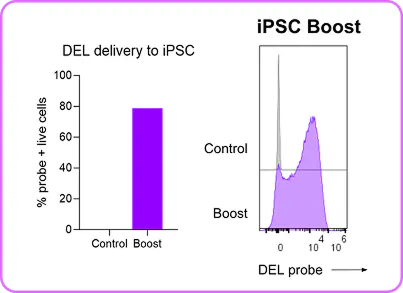
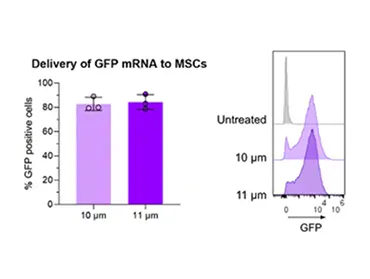
  • Efficient delivery in iPSCs and MSCs of Ngn2 mRNA, cRNA, DELs, and siRNA

Ready to see these results with your cells?

Tell us about your cargo and cell line: we'll show you what's possible for your program.
How We Did It

Portal uses mechanoporation to deliver virtually any cargo to diverse cell types while maintaining cell health. This enables intracellular delivery of impermeable molecules without the complications of electroporation or other delivery methods. Learn more about mechanoporation here! 

iPSCs Express Early Neuronal Markers 12hrs After Boosting With Ngn2 mRNA

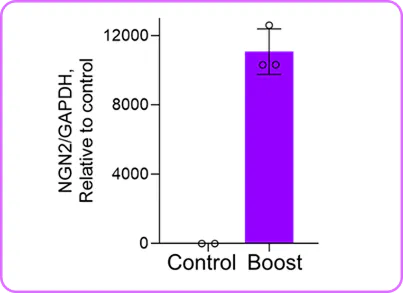
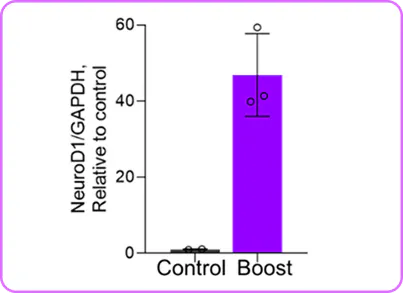
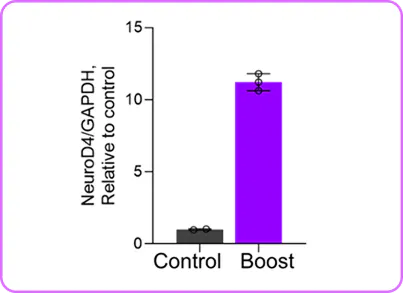
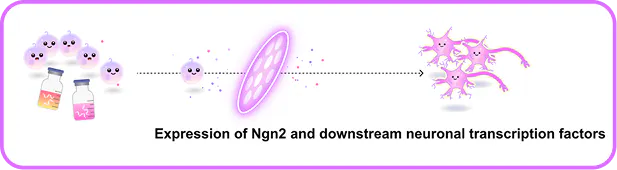
We demonstrated a method for initiating the conversion of human induced pluripotent stem cells (iPSCs) into neurons in just 12 hours using mechanoporation. We delivered neurogenin 2 (Ngn2) mRNA directly into human iPSCs using the Gateway system. To track delivery efficiency, we co-delivered dextran molecules and confirmed successful cellular uptake through flow cytometry analysis. Following the boosting, cells were harvested 12 hours later for RNA extraction and RT-qPCR analysis. 

The data shows that the Ngn2 mRNA boost significantly increased expression of Ngn2 itself (approximately 10,000-fold relative to control, Fig. 2), as well as downstream neuronal transcription factors NeuroD1 (approximately 40-fold increase, Fig. 3) and NeuroD4 (approximately 10-fold increase, Fig. 4). These results indicate that the mechanoporation-delivered Ngn2 mRNA successfully initiated a neuronal differentiation cascade, with the boosted cells expressing early neuronal markers within just 12 hours of treatment, demonstrating this is an efficient method for directing iPSCs toward a neuronal fate.

iPSCs maintain expression of housekeeping and pluripotency genes post-boost

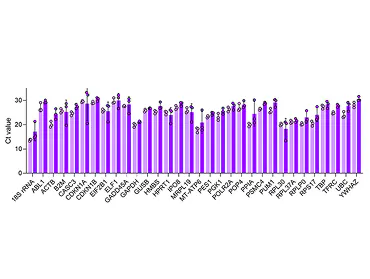
We investigated whether induced pluripotent stem cells (iPSCs) maintain their characteristic gene expression profiles after undergoing mechanoporation. We cultured iPSCs for 48 hours, then extracted total RNA from both untreated control cells and boosted cells. Using RT-qPCR, we analyzed the expression of numerous housekeeping genes (Fig. 5) and key pluripotency markers (Fig. 6). The data shows that boosted cells maintained expression levels comparable to untreated controls across all tested genes. Housekeeping genes showed consistent expression with Ct values mostly between 15-30, while pluripotency markers Oct4, SOX2, Nanog, Klf4, Myc, and TERT displayed relative expression levels normalized to ACTB that were similar after boosting. The minimal variation between treated and untreated samples, as indicated by the error bars, suggests that the boost treatment does not significantly alter the fundamental cellular identity or pluripotent state of iPSCs. 

iPSC: mRNA, siRNA, cRNA, and DELs 

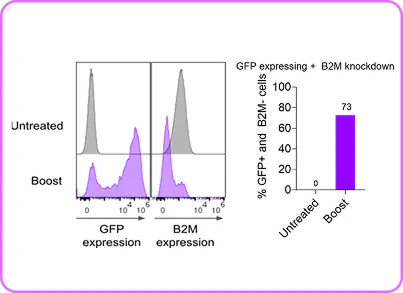
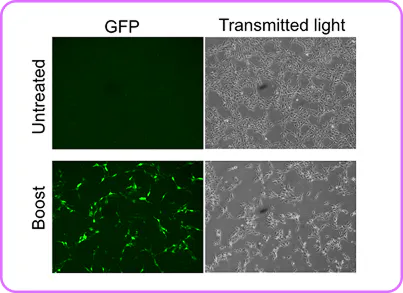
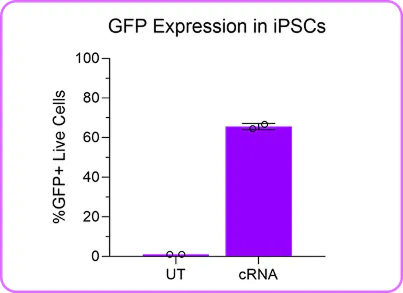
Several proof of concept studies were performed in iPSCs to demonstrate successful delivery of mRNA, cRNA, and DELs. iPSCs have been successfully boosted with GFP mRNA & B2M siRNA demonstrating effective multiplexed delivery (Fig xx). Additionally, GFP cRNA expression has been demonstrated in iPSCs (learn more about the usefulness of cRNA here!) along with successful delivery of DNA encoded libraries (DELs).

HSC & MSC: mRNA, siRNA

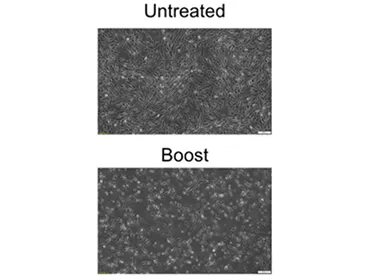
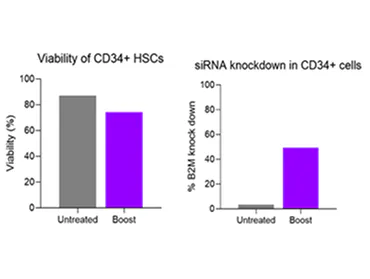
Several proof of concept studies were performed in HSCs & MSCs to demonstrate successful delivery of mRNA & siRNA. MSCs have been successfully boosted with GFP mRNA & HSCs with B2M siRNA demonstrating the usefulness of mechanoporation when working with HSCs.

Ready to learn more? Get in touch with our team!