


STEM CELL BIOLOGY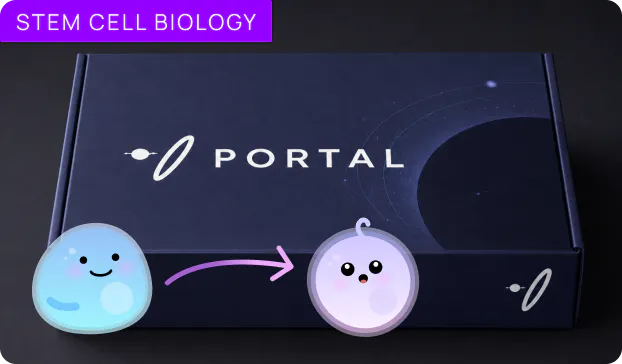
iPSC Generation
- Best suited for: PBMCs & fibroblasts
- Available enhancements: Oct4, Sox2, Klf4, cMyc RNA
- Best suited for: Reprogramming, disease modeling

WORKFLOW KIT · STEM CELL THERAPY
Deliver functional enhancers into CD34+ hematopoietic stem cells, preserving engraftment potential and stemness.
Every kit includes: RNA · Optimized protocols · MicroBooster™ cartridges · Suggested readouts · Reagents

Boost a homing or survival mRNA into CD34+ HSCs, then transplant them the same day. Mechanoporation leaves the transcriptome close enough to untreated that the cells engraft without a recovery culture first, so the graft goes in while the mRNA is still being expressed.
The problem
Getting cargo into a CD34+ cell is not the hard part. Getting one back that still behaves like a stem cell is. Electroporation delivers, but the cells come out stressed, forming fewer colonies and engrafting worse. Protocols compensate with a recovery culture, which costs a day of transient expression before the graft goes in.
With this kit
Gateway™ mechanoporation transiently opens each CD34+ cell by mechanical deformation, so mRNA, CRISPR RNP, or protein diffuses straight into the cytosol before the cell reseals. Boosted cells track untreated controls on microarray, in the colony-forming assay, and in spleen and bone marrow chimerism, so they can go from boosting straight into the animal with no rest period.
Gateway™ mechanoporation replaces the electroporation-plus-recovery step with a single, gentle delivery that the cells can be transplanted straight out of.
Portal has the Solution

01
Isolate
CD34+ HSCs

02
Mix
Cells + cargo (RNA / protein)

03
Boost
Gateway™ mechanoporation

04
Culture
HSC media post-boost

05
Confirm
Engraftment & viability
Unbiased, validated intracellular hits
>90%
Of human CD34+ HSCs express the boosted mRNA
3×
Spleen chimerism vs. electroporation, with no rest period before transplant
~80% edited
CD34+ HSCs after a single B2M CRISPR RNP boost, at >95% viability
The cargo and protocols below make this kit specific. The core consumables, settings, and support ship with every Portal kit.

Available Cargoes

Reagents & Consumables

Protocol & Settings

Support
Available Cargoes
Reagents & Consumables
Protocol & Settings
Support

Microarray on CD34+ HSCs at 6 and 24 hours after treatment, scoring genes misregulated more than 2-fold at p<0.05. Electroporated cells show broad up- and down-regulation at 6 hours that is still resolving at 24. Mechanoporated cells sit close to untreated controls at both timepoints, which is what lets the rest of the workflow skip a recovery step.

CD34+ HSCs were injected into NBSGW mice at 100,000 cells per animal immediately after treatment, with no recovery culture in between, and read out at week 8. Mechanoporated cells gave about 13% human cells in the spleen, matching untreated control, against about 4.5% after electroporation. Bone marrow chimerism and CD14+ and CD19+ lineage output tracked control the same way, so both myeloid and lymphoid potential came through the boost intact.

CXCR4 directs an HSC to CXCL12 in the marrow niche, and Plerixafor blocks it. HSCs boosted with CXCR4 A175F mRNA kept CXCL12-induced Ca²⁺ flux nearly intact under Plerixafor, about 9% reduction against about 70% for Plerixafor alone and about 36% for wild-type CXCR4 mRNA. The boosted cells go on signaling under a drug that blunts signaling in the cells around them.

Venetoclax kills by inhibiting BCL2, and the G101V substitution stops the drug binding. CD34+ HSCs boosted with BCL2 G101V mRNA held about 87% of cells at 48 hours under Venetoclax, against about 19% for control and about 56% for wild-type BCL2. In NBSGW mice the same cargo raised transferred-cell frequency to about 62% of human cells under Venetoclax, against about 44% for a GFP control (p<0.0001), while the two were indistinguishable with no drug.
Portal — enabling live-cell assays, target engagement, and compound profiling.
Kits include: Optimized protocols · Portal reagents · Delivery cartridges · Suggested readouts
 mRNA, siRNA, saRNA
 Proteins & Peptides
 CRISPR RNPs
 Small Molecules
 Polymers
 Nanoparticles
 Antibodies
 Virus
Virus PBMCs
PBMCs T cells
 B cells
 NK cells
 iPSCs
iPSCs Monocytes
 RBCs
RBCs HSCsmRNA, siRNA, saRNAProteins & PeptidesCRISPR RNPsSmall MoleculesPolymersNanoparticlesAntibodiesVirusPBMCsT cellsB cellsNK cellsiPSCsMonocytesRBCsHSCs