
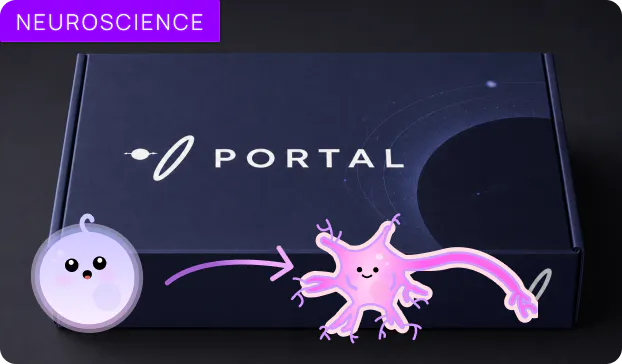
Neuronal Differentiation
- Best suited for: iPSC-derived neurons, neural progenitors
- Available enhancements: NGN2, ASCL1, LMX1A, FOXA2, NURR1, ASOs
- Best suited for: Neuronal differentiation, disease modeling, Parkinson's/ALS
WORKFLOW KIT · STEM CELL BIOLOGY
Reprogram PBMCs and fibroblasts into iPSCs using circRNA reprogramming factors.
Every kit includes: circRNA · Optimized protocols · MicroBooster™ cartridges · Suggested readouts · Reagents
Boost circRNA reprogramming factors straight into the cytosol of PBMCs or fibroblasts in a single step, with no viral vector and no DNA integration, so nothing is left behind in the genome and your starting cells stay healthy enough to make colonies.
The problem
Footprint-free reprogramming depends on getting reprogramming factors into the cytosol efficiently and repeatedly, without integrating DNA or killing the starting cells. Viral and CPP-based routes trade off efficiency, what they leave behind in the genome, and viability, and fibroblasts and PBMCs require slightly different delivery conditions.
With this kit
Gateway™ mechanoporation gives PBMCs or fibroblasts a gentle mechanical squeeze that transiently opens them, so circRNA encoding Oct4, Sox2, Klf4, and cMyc reaches the cytosol directly. There is no viral vector to package the factors into, so no cargo is too large to fit, and nothing is written into the genome on the way in.
Gateway™ mechanoporation replaces viral and CPP-based reprogramming routes with a single, gentle delivery.
Portal has the Solution
01
Isolate
PBMCs or fibroblasts
02
Mix
Cells + circRNA reprogramming factors
03
Boost
Gateway™ mechanoporation
04
Culture
Transfer to iPSC media
05
Confirm
Pluripotency markers & viability
Unbiased, validated intracellular hits
10 Days
circRNA still expressing in PBMCs after a single boost
Nothing Integrates
circRNA reprogramming factors, no virus and nothing added to the genome
PBMC + Fibroblast
Two validated starting points
The cargo and protocols below make this kit specific. The core consumables, settings, and support ship with every Portal kit.
Available Cargoes
Reagents & Consumables
Protocol & Settings
Support
Available Cargoes
Reagents & Consumables
Protocol & Settings
Support
Fibroblasts boosted with a fluorescently labelled 3 kDa dextran. More than 90% of live cells came back dextran-positive at every setting tested, against about 3% unboosted, and viability held between 62% and 77% of control.
GFP mRNA boosted into whole PBMCs expresses across every subtype in the well. T cells (CD3+), B cells (CD19+), NK cells (CD56+), and monocytes (CD14+) all shift GFP-positive after one boost, so you can start from unsorted PBMCs.
GFP circRNA and GFP mRNA boosted into PBMCs at 100 µg/mL, then tracked for 10 days. circRNA peaks near 34,000 MFI at day 3 and is still expressing at day 10, while mRNA starts lower and falls back to the no-cargo baseline by day 7. Mechanoporated circRNA needs no base modifications to express.
iPSCs boosted on Gateway™ and compared with untreated controls by RT-qPCR. Oct4, SOX2, Nanog, Klf4, Myc, and TERT all sit at roughly control levels relative to ACTB, and 32 housekeeping genes are unchanged. Boosting itself does not disturb the pluripotency program.
Published reprogramming of NUFF fibroblasts, where reprogramming proteins delivered by mechanical squeeze produced about 150 iPSC colonies against 11 for nucleofection and 2 for CPP-only delivery. (Sharei et al., 2013, PNAS.)
Portal — enabling live-cell assays, target engagement, and compound profiling.
Kits include: Optimized protocols · Portal reagents · Delivery cartridges · Suggested readouts